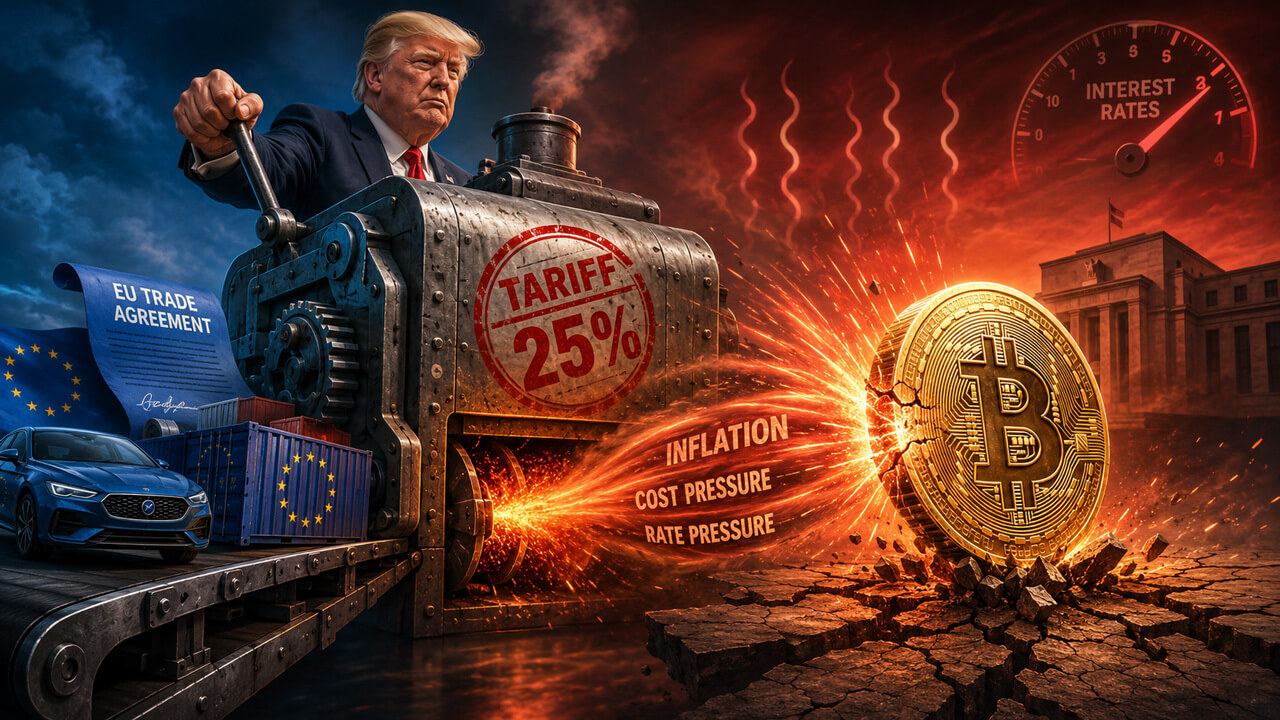
The European Union is scrambling to finalize its portion of the existing US-EU trade agreement before a May 19 trilogue meeting in Strasbourg, amid escalating threats from President Trump to hike tariffs on EU automotive imports from 15% to 25%. The Kiel Institute has warned that such measures could trigger broader economic disruptions affecting digital assets.
**Why it matters:** Trade war escalations historically drive institutional investors toward Bitcoin as a hedge against currency debasement and economic uncertainty. However, the current tariff threats come at a delicate moment when digital assets are already navigating regulatory headwinds and macroeconomic pressures. Unlike previous ethereum upgrade analysis periods that focused on technical improvements, today's crypto market faces external geopolitical risks that could overshadow technological progress. Any failure to reach a trade deal could accelerate dollar strength while simultaneously increasing demand for decentralized stores of value.
**Context:** This development follows a pattern of trade tensions that have periodically boosted crypto adoption since 2018. Previous tariff disputes between major economies have correlated with increased Bitcoin trading volumes in affected regions, as investors seek alternatives to traditional forex hedging strategies.
• EU Parliament voting patterns and any emergency sessions scheduled before May 19
• Bitcoin correlation with traditional safe-haven assets like gold during trade announcement periods
The intersection of geopolitical risk and digital asset adoption continues to create complex market dynamics that institutional players must navigate carefully, particularly as regulatory frameworks remain in flux across both jurisdictions.
#Bitcoin #TradeWar #Geopolitics