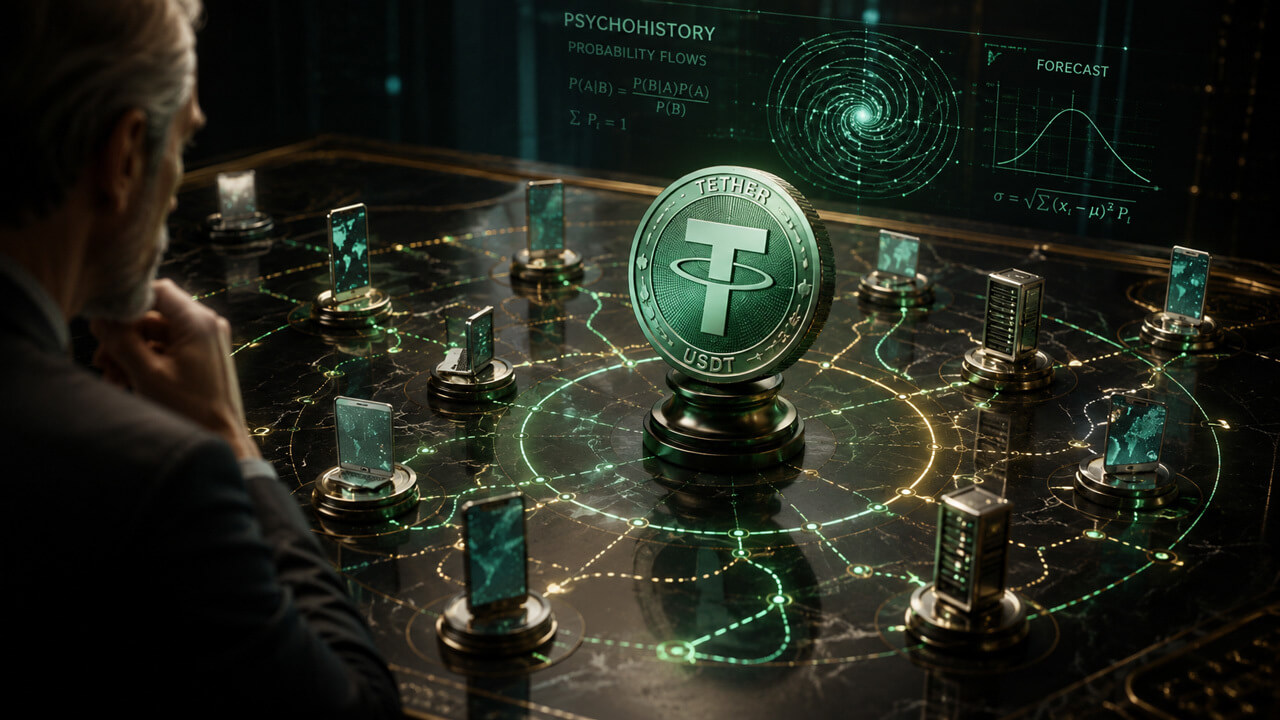
Tether unveiled its QVAC project, launching "QVAC Psy" foundational AI models explicitly rooted in Isaac Asimov's psychohistory concept from the Foundation series. The stablecoin giant describes the initiative as developing decentralized local AI systems that apply mathematical and statistical principles to social dynamics prediction.
This marks a significant strategic pivot for Tether beyond its core USDT operations into artificial intelligence infrastructure. The move signals how major crypto companies are diversifying into adjacent technologies, potentially leveraging their massive cash reserves and technical expertise to capture emerging AI market opportunities. As traditional financial institutions accelerate bitcoin institutional adoption and crypto integration, established players like Tether are positioning themselves across multiple high-growth sectors rather than remaining purely focused on digital currency infrastructure.
The psychohistory reference isn't merely marketing flourish—Asimov's fictional discipline involved using mathematical models to predict large-scale social and economic trends. Tether's application suggests ambitions to create AI systems capable of analyzing market dynamics and behavioral patterns at scale. This aligns with broader industry trends where crypto companies are expanding into AI, following similar moves by other blockchain infrastructure providers.
• **Integration potential** between Tether's AI models and existing stablecoin operations for enhanced market analysis
• **Competition response** from other stablecoin issuers and whether they pursue similar AI diversification strategies
The intersection of crypto treasury management, AI development, and predictive analytics could reshape how digital asset companies operate, potentially creating new revenue streams beyond traditional token services while strengthening their competitive moats in an increasingly crowded market.
#TetherAI #CryptoAI #StablecoinEvolution